
Stipend vs Exposure: What Matters More in Articleship?
One of the biggest dilemmas CA students face while choosing an articleship is whether to prioritize stipend or exposure. A higher stipend may seem attractive in the short term, but the quality of exposure can influence your skills, confidence, employability, and long-term career growth. This guide explores both perspectives and helps students make a smarter career decision.
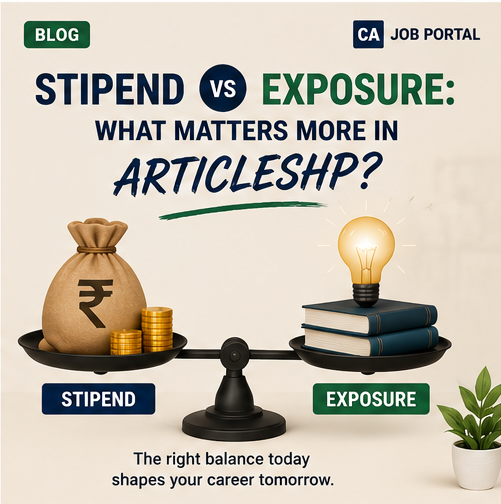
One of the most common questions CA students ask while searching for articleship opportunities is:
"Should I choose a firm that offers a higher stipend or a firm that provides better exposure?"
It is a fair question. For many students, articleship is their first professional opportunity, and receiving a higher stipend can be financially rewarding. At the same time, articleship is also the most important practical learning phase of the Chartered Accountancy journey.
The challenge lies in balancing short-term financial benefits with long-term career growth.
So what should matter more—stipend or exposure?
Understanding the Purpose of Articleship
Before comparing stipend and exposure, it is important to understand the primary purpose of articleship.
Articleship is not designed to be a high-paying job. It is a structured training period where students gain practical experience in:
- Audit
- Taxation
- Compliance
- Financial Reporting
- Client Management
- Business Operations
The objective is to transform theoretical knowledge into professional competence.
When viewed from this perspective, articleship should be considered an investment in your future career rather than simply a source of income.
Why Stipend Matters
There is nothing wrong with considering stipend while evaluating opportunities.
A higher stipend can:
- Reduce financial pressure
- Cover transportation and living expenses
- Increase motivation
- Provide greater independence
For students living away from home or managing educational expenses, stipend can play an important role.
However, stipend should rarely be the only deciding factor.
The Real Value of Exposure
Exposure refers to the practical learning opportunities available during articleship.
This includes:
- Audit assignments
- Taxation work
- GST compliance
- Client interactions
- Industry exposure
- Financial statement analysis
- Business process understanding
These experiences help students develop skills that remain valuable throughout their professional careers.
Unlike stipend, which benefits you for a limited period, exposure continues generating returns long after articleship is completed.
A Simple Example
Consider two hypothetical students.
Student A joins a firm offering a higher stipend but spends most of the time performing repetitive tasks with limited learning opportunities.
Student B joins a firm with slightly lower stipend but gains exposure to audits, taxation, client meetings, compliance work, and multiple industries.
At the end of two years, Student B is likely to possess stronger technical knowledge, greater confidence, and better interview performance.
In many cases, the additional skills gained through exposure result in significantly higher earning potential after qualification.
How Exposure Impacts Future Career Opportunities
Recruiters frequently evaluate candidates based on the practical experience they gained during articleship.
Common interview questions include:
- What type of audits have you worked on?
- Which industries have you handled?
- What taxation assignments have you completed?
- Have you interacted with clients?
- What challenges have you solved?
Students with diverse exposure often have stronger answers and greater confidence during interviews.
This can lead to better job opportunities and faster career progression.
When a Higher Stipend Can Be Misleading
Many students assume that a higher stipend automatically indicates a better firm.
This is not always true.
Some firms may offer attractive stipends but provide limited exposure, repetitive assignments, or restricted learning opportunities.
On the other hand, some firms offering modest stipends may provide exceptional practical training and mentorship.
Students should evaluate the complete opportunity rather than focusing only on compensation.
Questions to Ask Before Making a Decision
Before accepting an articleship offer, students should ask:
- What domains will I work in?
- How much audit exposure will I receive?
- Will I gain taxation experience?
- Will I interact with clients?
- What industries does the firm serve?
- How much responsibility will I receive?
- Is there a mentorship or training structure?
The answers to these questions often reveal the true value of the opportunity.
Can You Have Both?
Absolutely.
Some firms successfully provide both competitive stipends and strong learning opportunities.
Whenever possible, students should look for opportunities that offer:
- Meaningful exposure
- Good mentorship
- Professional growth
- Reasonable compensation
However, if you must choose between slightly higher stipend and significantly better exposure, exposure is often the smarter long-term investment.
Think Beyond Two Years
One useful exercise is to ask yourself:
"Which opportunity will make me a stronger Chartered Accountant after two years?"
The answer often provides clarity.
Articleship lasts for a limited period, but the skills and experience gained during that time can influence your career for decades.
Final Thoughts
Stipend is important, and students should not ignore financial considerations. However, articleship should primarily be evaluated based on the quality of learning and exposure it provides.
The purpose of articleship is to build professional capability, not maximize short-term earnings.
Students who prioritize exposure often develop stronger technical skills, broader business understanding, better communication abilities, and greater confidence.
These advantages frequently translate into better opportunities and higher earning potential after qualification.
When choosing between stipend and exposure, remember that stipend pays you for two years—but exposure can reward you for an entire career.
One of the most common questions CA students ask while searching for articleship opportunities is:
"Should I choose a firm that offers a higher stipend or a firm that provides better exposure?"
It is a fair question. For many students, articleship is their first professional opportunity, and receiving a higher stipend can be financially rewarding. At the same time, articleship is also the most important practical learning phase of the Chartered Accountancy journey.
The challenge lies in balancing short-term financial benefits with long-term career growth.
So what should matter more—stipend or exposure?
Understanding the Purpose of Articleship
Before comparing stipend and exposure, it is important to understand the primary purpose of articleship.
Articleship is not designed to be a high-paying job. It is a structured training period where students gain practical experience in:
- Audit
- Taxation
- Compliance
- Financial Reporting
- Client Management
- Business Operations
The objective is to transform theoretical knowledge into professional competence.
When viewed from this perspective, articleship should be considered an investment in your future career rather than simply a source of income.
Why Stipend Matters
There is nothing wrong with considering stipend while evaluating opportunities.
A higher stipend can:
- Reduce financial pressure
- Cover transportation and living expenses
- Increase motivation
- Provide greater independence
For students living away from home or managing educational expenses, stipend can play an important role.
However, stipend should rarely be the only deciding factor.
The Real Value of Exposure
Exposure refers to the practical learning opportunities available during articleship.
This includes:
- Audit assignments
- Taxation work
- GST compliance
- Client interactions
- Industry exposure
- Financial statement analysis
- Business process understanding
These experiences help students develop skills that remain valuable throughout their professional careers.
Unlike stipend, which benefits you for a limited period, exposure continues generating returns long after articleship is completed.
A Simple Example
Consider two hypothetical students.
Student A joins a firm offering a higher stipend but spends most of the time performing repetitive tasks with limited learning opportunities.
Student B joins a firm with slightly lower stipend but gains exposure to audits, taxation, client meetings, compliance work, and multiple industries.
At the end of two years, Student B is likely to possess stronger technical knowledge, greater confidence, and better interview performance.
In many cases, the additional skills gained through exposure result in significantly higher earning potential after qualification.
How Exposure Impacts Future Career Opportunities
Recruiters frequently evaluate candidates based on the practical experience they gained during articleship.
Common interview questions include:
- What type of audits have you worked on?
- Which industries have you handled?
- What taxation assignments have you completed?
- Have you interacted with clients?
- What challenges have you solved?
Students with diverse exposure often have stronger answers and greater confidence during interviews.
This can lead to better job opportunities and faster career progression.
When a Higher Stipend Can Be Misleading
Many students assume that a higher stipend automatically indicates a better firm.
This is not always true.
Some firms may offer attractive stipends but provide limited exposure, repetitive assignments, or restricted learning opportunities.
On the other hand, some firms offering modest stipends may provide exceptional practical training and mentorship.
Students should evaluate the complete opportunity rather than focusing only on compensation.
Questions to Ask Before Making a Decision
Before accepting an articleship offer, students should ask:
- What domains will I work in?
- How much audit exposure will I receive?
- Will I gain taxation experience?
- Will I interact with clients?
- What industries does the firm serve?
- How much responsibility will I receive?
- Is there a mentorship or training structure?
The answers to these questions often reveal the true value of the opportunity.
Can You Have Both?
Absolutely.
Some firms successfully provide both competitive stipends and strong learning opportunities.
Whenever possible, students should look for opportunities that offer:
- Meaningful exposure
- Good mentorship
- Professional growth
- Reasonable compensation
However, if you must choose between slightly higher stipend and significantly better exposure, exposure is often the smarter long-term investment.
Think Beyond Two Years
One useful exercise is to ask yourself:
"Which opportunity will make me a stronger Chartered Accountant after two years?"
The answer often provides clarity.
Articleship lasts for a limited period, but the skills and experience gained during that time can influence your career for decades.
Final Thoughts
Stipend is important, and students should not ignore financial considerations. However, articleship should primarily be evaluated based on the quality of learning and exposure it provides.
The purpose of articleship is to build professional capability, not maximize short-term earnings.
Students who prioritize exposure often develop stronger technical skills, broader business understanding, better communication abilities, and greater confidence.
These advantages frequently translate into better opportunities and higher earning potential after qualification.
When choosing between stipend and exposure, remember that stipend pays you for two years—but exposure can reward you for an entire career.